The idea of a Mediterranean Fuel Hub in Malta’s Exclusive Economic Zone is an idea which has resonated significantly with Malta’s maritime community and with all those who are closely associated with the maritime sector from a cross section of the political spectrum.
The Exclusive Economic Zone Act of 2021, as amended in 2023, provides for the establishment of an exclusive economic zone adjacent to the territorial waters of Malta, outlining Malta’s extensive rights over such a zone. However, to date, no zone has as yet been designated.
The maritime sector in Malta is one of Malta’s main economic pillars. While many associate the maritime sector limitedly with the registration of ships in Malta, in reality, while the Malta flag is the largest flag in Europe with some of the most prestigious and important fleets in the world registered in Malta, maritime Malta is much, much more.
It encompasses every conceivable maritime activity, including the registration of ships, from transhipment to ship repair, from yachting to maritime education, from providing supplies and provisions to ships to arranging for crew changes, from pilotage to cruise line operation, from inter island transportation to towage to bunkering, from the provision of international fast ferry services to ship agency and ship management and crewing.
All of these sectors supported by highly experienced professional teams of maritime lawyers, corporate service providers, marine surveyors, technical experts and naval architects.
One of the reasons why the maritime sector is second nature to Malta is due to the fact that we are an island bang in the middle of the Mediterranean equidistant from Suez and Gibraltar and the shores of Sicily and North Africa. Malta is directly on the rum line between Suez and Gibraltar and, therefore, Malta is a hugely convenient stop for vessels wishing to take on supplies en route without needing to deviate from the contractual route in a business where the slightest deviation means additional sailing days and money.
Whether it is provisions, fresh water, crew changes, awaiting instructions for onward voyages or bunkering, Malta is, therefore, extremely convenient and has made a very good name for itself.
In addition to its prime geographical location, the deep waters surrounding Malta shallow to the southeast at an area referred to as Hurd’s Bank on our 12-mile territorial limit where ships can actually drop their anchor and procure their maritime services from Malta without having to come into harbour.
So, the very idea of having an LNG terminal, a fuel hub, out at Hurd’s Bank is not only highly commendable but it is precisely the type of important additional activity which Malta needs and requires. As a leading maritime nation there is the expectation that the country continues to develop its maritime space and this project has succeeded in getting the entire maritime community to be hugely supportive and enthusiastic about it.
The idea of having an LNG terminal which can in future adapt to take on other green fuels is ingenious for a number of reasons.
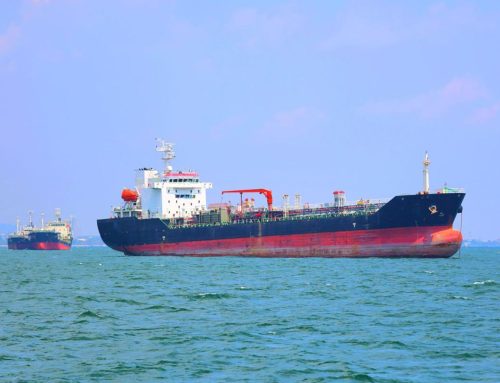
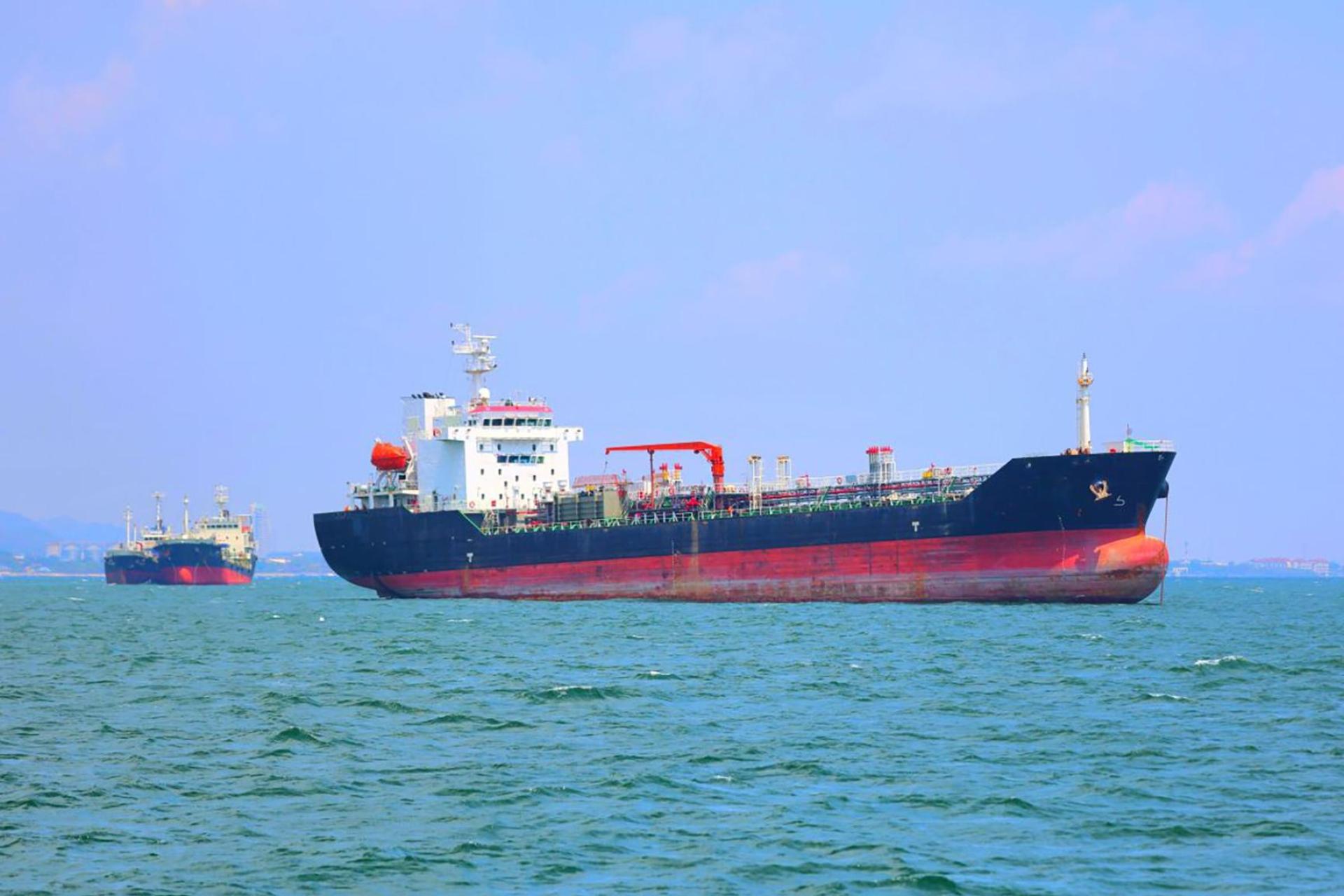
Currently, Malta provides the location for the bunkering of conventional fuels – this has been going on at Hurd’s Bank for decades. However, at the moment no vessel which runs on LNG can actually bunker off Malta because there is no LNG bunkering capability. LNG, although a fossil fuel, is considered as the greenest of fossil fuels and is the least pollutant, which is why a number of new builds now run on LNG.
Furthermore, decarbonisation of the maritime space has been the talk of the town in Europe, at other regional levels and at an international level, principally the IMO, for many, many months and we have seen the introduction of the EU ETS and similar measures by other regions quite apart from the extensive discussion at the IMO on the Net Zero framework. Commercial shipping is seriously gravitating towards cleaner fuels and alternative green fuels including, for instance, methanol and ammonia.
Thus, a terminal off Malta, the Mediterranean Fuel Hub, at Hurd’s Bank, which can act as an LNG provider to other bunker suppliers who will supply ships with LNG or as an LNG provider to vessels carrying LNG as cargo, is clearly a concept that will take Malta and maritime service providers in Malta to another highly desirable level.
The entire project would be within Malta’s EEZ, regulated by Maltese law and monitored by an appropriate entity.
This is precisely the type of quality project which an already highly enterprising and hard-working maritime community in Malta strives for.
This is precisely the type of development which the maritime industry requires and deserves and, thus, it is no surprise at all that this visionary concept has met with such a great degree of approval and enthusiasm.
In addition to the above, a further bonus is that, as a result of the placing of a Floating Storage Regasification Unit (FSRU) at the terminal at Hurd’s Bank, LNG can be piped via undersea cables as gas directly from the terminal at Hurd’s Bank to the power station at Marsaxlokk.
This would immediately eliminate the Floating Storage Unit currently moored inside Marsaxlokk with all the obvious health and safety risks to the entire population of Marsaxlokk, which should never have been there in the first place.
In conclusion, Malta should not miss out on this resounding opportunity of a Mediterranean Fuel Hub. It is the type of vision we need.
by Dr Ann Fenech, Partner at Fenech & Fenech Advocates, President of CMI and Member of the MMF BOD
Source: This article appeared in the Times of Malta