There is an urgent need for a governance framework that allows for better coordination in the maritime sector, Malta Maritime Forum chairman Godwin Xerri said. That is why we are calling for a dedicated maritime authority, an entity that owns the national maritime vision and drives coordination at government level in a timely and focused manner.
Maritime affairs in Malta remain fragmented, often leading to misalignment or policy gaps, he said in an interview with The Malta Independent on Sunday on the occasion of the forum’s 10th anniversary.
Being part of Transport Malta, with a daunting span of responsibilities already, the maritime industry is not getting the focus it deserves and needs to grow, he said. The forum has long advocated for the establishment of a dedicated maritime authority to bring together policy, infrastructure and education under a single umbrella. Such an entity – which used to exist until 2010 when it was incorporated into Transport Malta – would help ensure consistency and long-term focus in decision-making.
Secondly, we need to identify new niches for growth within the industry. While Malta hosts one of Malta’s largest ship registers, other countries have turned maritime activity into a full-fledged industry generating value through ship management, financing, and crewing services.
We need to ask why certain sectors are not locating here and what legislative or fiscal adjustments can attract them, Xerri said. We should create a level playing field not just for registration, but for the entire maritime ecosystem.
The Forum is conducting a second economic study to follow up on a report it had carried out in 2021. The aim is to identify the segments that can deliver the strongest multiplier effect for the Maltese economy. “We will be sharing its results hopefully by next year. The maritime sector is still taken for granted as if it requires little or no policy and support. Yet few other industries can generate so much strategic and economic value across so many linked activities,” Xerri said.
As the Malta Maritime Forum marks its tenth anniversary, the forum believes that its role as the unifying voice of Malta’s maritime industry has never been more relevant. Over the past decade, the Forum has evolved into an influential policy partner, shaping national and European discussions that directly impact the sector. The MMF believes this ten-year milestone represents a moment to reflect on how far the industry has come and how it must now prepare for an era defined by environmental, technological and geopolitical change.
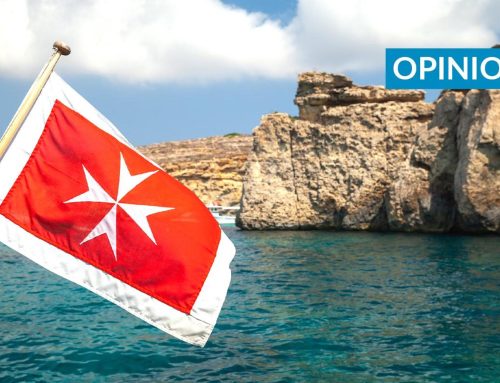
The most transformative developments of the past decade have extended beyond the growth of Malta’s ship registry. The significant rebound of the Valletta Cruise Port from COVID, the Freeport’s expansion, the regeneration of the ship repair facilities, and many other success stories in industry, and the continued global prominence of the Malta Flag are some of the successes of the maritime industry, which has established itself as a key contributor – though not always publicly acknowledged – towards the Maltese economy.
Yet, the Forum’s leadership recognises that the country’s future depends on expanding beyond registration to build a broader maritime services cluster to include ship management, financing, crewing and specialised logistics. The industry’s potential lies in value creation through integration rather than dependence on any single area of activity.
The Forum’s collaborative model, bringing together ship owners, port operators, agents and service providers, has also proven instrumental in shaping national policy, the MMF leadership said. By providing government with a unified industry position on issues ranging from port competitiveness to climate adaptation, the MMF has strengthened the quality of consultation and policymaking. At EU level, the Forum said it has been active in discussions on environmental regulation, particularly around the Emissions Trading System (ETS) and other decarbonisation initiatives. Its technical input has ensured that Malta’s perspectives as a small maritime state are heard in broader European debates.
As the global maritime industry faces accelerating regulatory obligations, the Forum believes Europe must seek to strike a careful balance between sustainability and competitiveness. The MMF is not against decarbonisation, it is against the regionality of the ETS scheme which has created a disproportionate impact on smaller, island ports in the Mediterranean.
For years, we were able to compete on efficiency and quality, despite Northern African ports already enjoying lower operating costs. It is not an issue of fearing competition. We never had any issue about being part of a competitive market. But ETS presents existential challenges on various levels. The reality is very simple: if the ETS scheme continues to be imposed exclusively on European ports, there is no way that those ports in proximity to competing non-EU hubs can compete. Ships will simply choose North African ports, where they are able to save millions in costs.
The Forum is therefore urging the government to work more closely with like-minded EU member states, particularly from Southern Europe, to push for fairer measures at EU level. Environmental obligations cannot come at the expense of people and jobs. That cannot be right. Moreover, in the wake of the Russian invasion of Ukraine and the US’s isolationist policies, the EU has spoken a lot about defending its industries from unfair competition as well as about the need for strategic autonomy. Yet the MMF fears that with such move, Europe will end up losing control of supply chains, and “we will end up depending on other countries to keep our goods coming in”.
Seafaring careers
MMF deputy chairman Alex Montebello said seafaring careers must be promoted more actively. Most importantly, we must work together to highlight the wide range of exciting opportunities which exist in the industry, and these opportunities are not just about working at sea.
“Actually, that is just a fraction of this industry,” he said. “The maritime industry today needs engineers, technicians, lawyers, IT specialists, and many finance professionals.”
The latter can actually be a whole niche industry in itself, ships cost a huge amount of money, and in that sense, ship financing and insurance generate billions of revenue around the globe.
“We have already made strides in the educational field, including the establishment of a Master’s degree in Port Management and Logistics, developed through collaboration between the Universities of Malta, Cadiz, Gdansk and the Algarve. This is an important step forward, but we now need a coordinated national approach to align vocational and academic pathways with the industry needs,” he said.
Alternative fuels
MMF CEO Kevin J. Borg said one of the biggest challenges facing the shipping industry today is uncertainty over which alternative fuels will ultimately become the global standard for decarbonised operations. The industry largely plays a waiting game for the outcome of research taking place at the global level which remains inconclusive as to which technology and fuel will prevail in the future. Indeed, this uncertainty has created dilemmas to ship owners who are currently ordering ships (with production lags lasting until 2027 or beyond).
The cost of a new vessel is exorbitant, and the risk of future obsolescence is very high for fleet-owners. The MMF calls repeatedly for direction for the industry which is vast and diverse. Few acknowledge the extensive and lengthy process of coordination which is required amongst the key stakeholders involved in the decision. These include ship-owners, charterers, ship-builders, port operators, port services, providers of navigation control systems, fuel and bunker suppliers and other stakeholders in the fuel distribution network, builders of propulsion systems, training institutions, law makers, insurers, financiers and others.
That said, the MMF believes it is of key importance for Malta to explore the possibilities of new more advanced fuels because until the authorities make the necessary legislative changes and support the transformation with adequate support to industry players, Malta will continue to lose precious business to other ports elsewhere.
The Forum, he said, is also lobbying for targeted investment in maritime infrastructure. If we want to attract the latest vessels, we must ensure that our ports are equipped to accommodate their technological and environmental needs. Otherwise, we will lose both competitiveness and opportunity.
In this context, we welcome the government’s announcement, in Budget 2026, in favour of land reclamation for maritime infrastructural projects that are designed and operated by industry stakeholders. Naturally this must be accompanied by extensive economic and environmental impact assessments, he said.
Source: The Malta Independent on Sunday
The second part of the interview will be carried in The Malta Business Weekly on Thursday