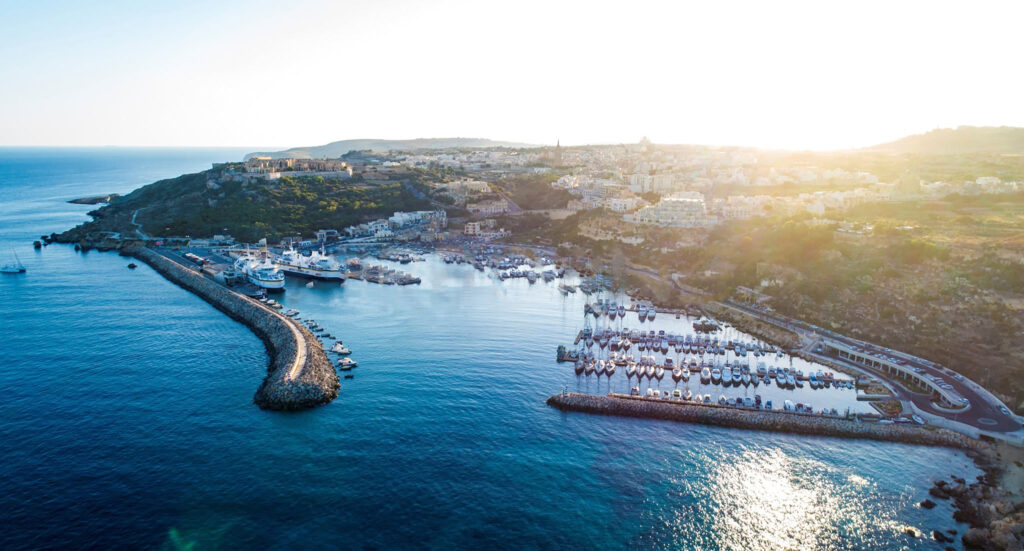
The Malta Maritime Forum (MMF) is calling for a Roll-On/Roll-Off (Ro-Ro) cargo service linking Malta Freeport with the Grand Harbour and Mġarr Harbour in Gozo, arguing that shifting freight from roads to sea would reduce heavy traffic between Birżebbuġa and Ċirkewwa, ease congestion and lower emissions.
The proposal forms part of the MMF’s pre-Budget 2027 recommendations, which urge Government to give greater priority to Malta’s maritime industry. The Forum warns that delays in infrastructure upgrades, maintenance and investment could undermine the country’s resilience, connectivity and economic competitiveness.
The MMF is advocating a series of national priorities, including transferring freight to sea, strengthening the maritime workforce, reinvesting climate-related revenues in cleaner shipping and protecting critical port infrastructure.
Citing a study, the Forum estimates that trucks emit 0.218kg of CO₂ per tonne-mile, compared with 0.04kg for ships, making road transport approximately 5.5 times more emissions-intensive.
The MMF wants the proposed cargo service included in the Malta in Motion concept and assessed according to its wider social and environmental benefits, rather than commercial profitability alone.
It also highlighted growing pressure on Malta’s Ro-Ro infrastructure. Trailer traffic has increased from around 35,000 to 75,000 TIR units over 20 years, while facilities have remained unchanged. Three berths have been reduced to one at Laboratory Wharf, limiting capacity and preventing newer, more efficient vessels from operating. Similar constraints affect Deep Water Quay and Flagstone Wharf.
The Forum warns that an island economy should not depend on a single Ro-Ro berth without a backup option.
The MMF is also calling for investment to improve the resilience of Marsaxlokk Port and the Grand Harbour against increasingly severe weather events.
Recent storms have exposed the vulnerability of strategic port infrastructure. The infrastructure behind the Marsaxlokk breakwater includes Malta’s only bulk liquefied petroleum gas (LPG) import point, making its protection particularly important for national energy security.
The Forum argues that port resilience must be treated as a strategic national requirement, with priority given to breakwater protection, berth reinforcement, harbour protection works and other measures needed to safeguard cargo operations, bunkering and maritime connectivity.
Despite Malta’s substantial international ship register, the number of locally certified maritime officers remains limited. To address this, the MMF proposes establishing a National Maritime Certification Centre, a Maritime Skills Board and a national cadetship scheme supported by incentives and a public-private scholarship fund.
It also recommends a medium-term target of at least 600 valid Maltese Certificates of Competency, alongside expanded simulator-based and blended training, to strengthen the pipeline of Maltese maritime officers and technical professionals.
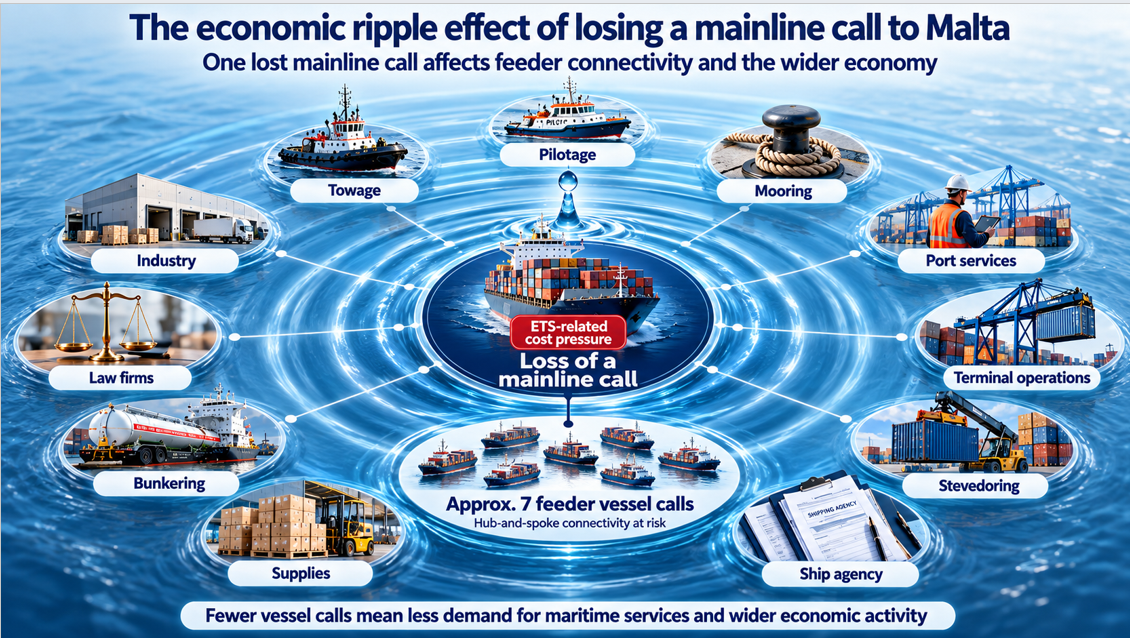
Another key recommendation is a dedicated financing mechanism for maritime decarbonisation and digitalisation, potentially supported by revenues obtained through the EU Emissions Trading System until the mechanism is established. This would help direct a meaningful share of EU-derived climate funding back into the maritime sector.
The Forum is also calling for clear legal frameworks governing the maritime use of hydrogen, ammonia, biomethane and liquefied natural gas (LNG). It warns that regulatory uncertainty could discourage investment in the necessary infrastructure and cause Malta to lose cleaner-fuel bunkering business to competing Mediterranean ports.
MMF Chairman Godwin Xerri said the maritime industry is too often treated as just another commercial sector, despite its systemic importance to an island economy.
“In Malta’s case, this infrastructure enables food, medicine, fuel, industrial supplies and much of our trade to reach the country. We are proposing practical measures that produce wider national benefits: fewer heavy vehicles on the roads, a stronger pipeline of Maltese maritime professionals, safer and more resilient ports and a mechanism that directs climate funding towards real emissions reductions.
“The test of the 2027 Budget will not be how many maritime initiatives it mentions, but whether responsibility, funding and deadlines are attached to them,” added Xerri.
The MMF is further calling for permanent coordination between ministries on maritime matters and a structured mechanism for Government and industry to assess proposed EU legislation affecting Malta’s connectivity and competitiveness.
It argues that Budget 2027 should translate the National Maritime Transport Strategy into an actionable programme with clear responsibilities, timelines and measurable targets.